
Lubbock County Court Records After a Jail Arrest
The arrest-to-court path in Lubbock County has two public record tracks. The jail roster is the custody record held by the Lubbock County Sheriff's Office. It can show the person is booked into the Lubbock County Detention Center, the identifiers assigned to the booking, and bond settings after magistrate review. Court records after a jail arrest are different. They begin when the Lubbock County Criminal District Attorney reviews law-enforcement reports and files charges that become a case in the courts served by the District Clerk.
The District Clerk page says the clerk is custodian of court pleadings and papers in criminal and other causes served by the office. It lists the 72nd, 99th, 137th, 140th, 237th, and 364th District Courts plus County Court at Law #1, #2, and #3. It also links Lubbock County online records access, re:SearchTX, and eFileTexas. For the custody side, use jail inmate records. For careful booking-photo wording, use the jail roster mugshots page. For filed court records after an arrest, use the clerk and court access routes.
The District Clerk's official page identifies the court-record access and records request channels.
View the Lubbock County District Clerk source.
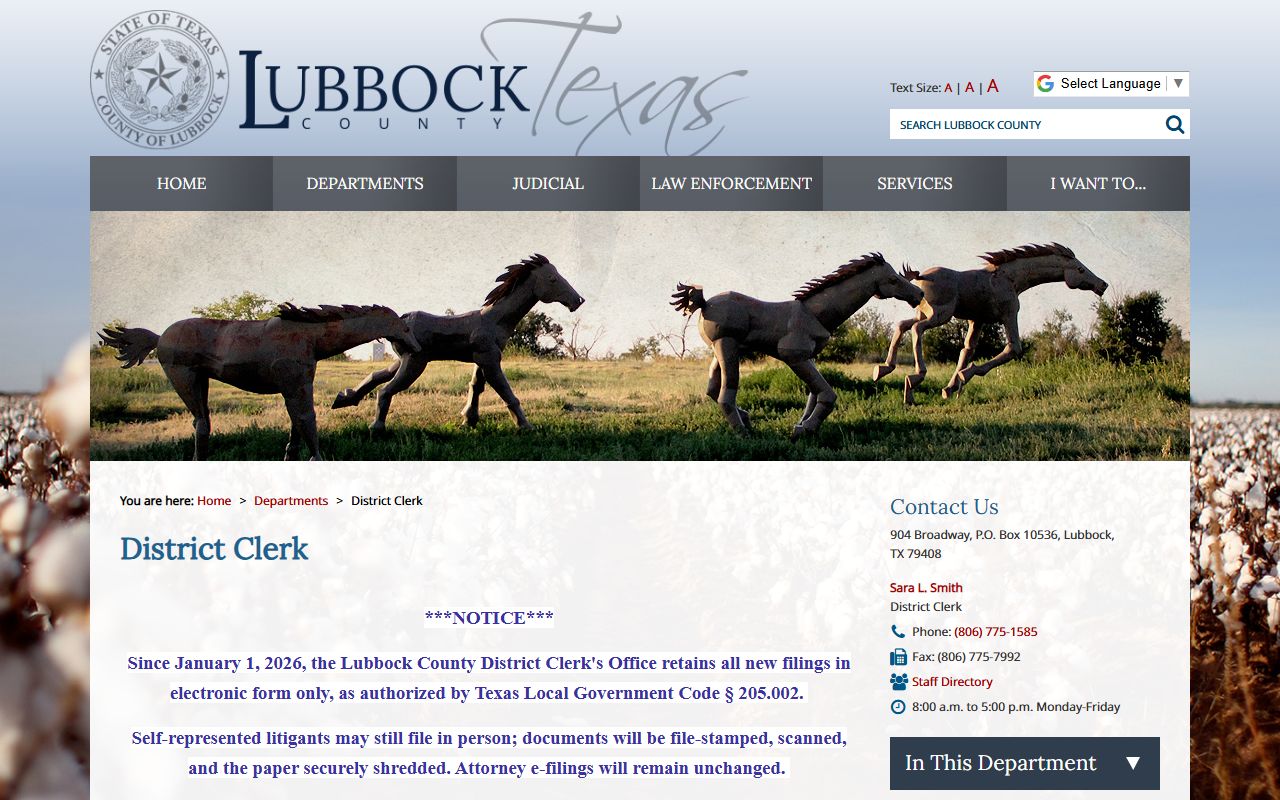
That clerk route is the local starting point once the arrest has become a filed criminal case.
How to Find Lubbock County Court Records After an Arrest
Search timing matters. A person can appear on the active jail roster before a formal case is searchable in the clerk system. Initial appearance and bond can happen before the prosecutor's final filing decision, and booking charges may later be accepted, rejected, amended, reduced, or presented to a grand jury.
- Start with the Lubbock County Jail Roster to confirm the person was booked and to copy the exact name, booking number, SO number, charges, and bond status.
- Open the District Clerk's records route or the statewide re:SearchTX portal at research.txcourts.gov.
- Search by defendant name or case number. A case number may come from clerk notices, court paperwork, an indictment, information, citation, or bond documents.
- Open the matching criminal case and read the charge list, filing date, court, docket activity, settings, and current disposition where access is allowed.
- If the case is not online, older, sealed from public view, or requires a document copy, email the District Clerk records request address at dcarchives@lubbockcounty.gov.
Statewide criminal-history checks are separate from casual court lookup. Texas DPS Crime Records Service is the official statewide criminal-history route and may involve fees, account rules, fingerprints, or statutory limits depending on the request.
re:SearchTX is the statewide case-record access portal referenced by the District Clerk.
View the re:SearchTX court search source.
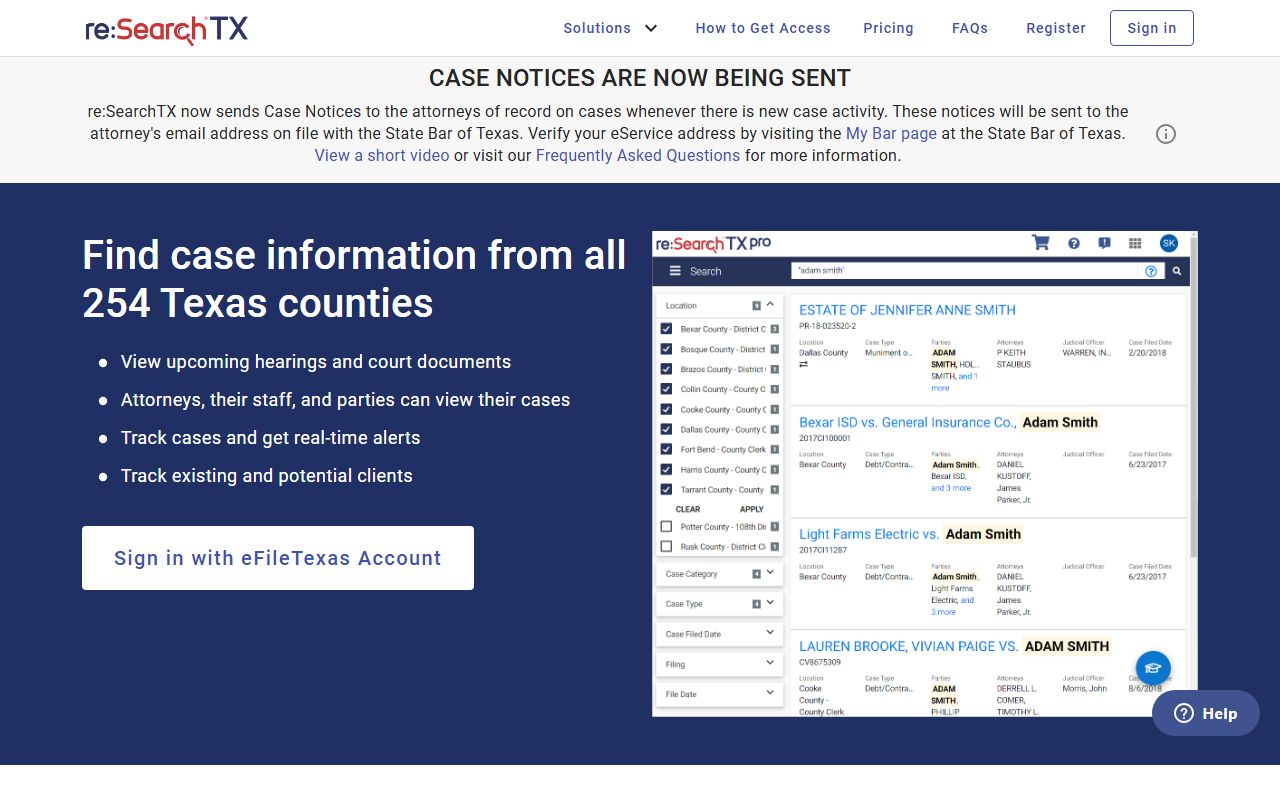
Access to filed documents depends on account status, permissions, court rules, and whether a document is public.
How Charges Get Filed After an Arrest: Complaint, Information, and Indictment
Booking starts the jail record. The charge record starts when an accusation is filed in court. In Lubbock County, the Criminal District Attorney is the prosecuting office for felony and many misdemeanor criminal prosecutions. The DA, identified in the research as Sunshine Stanek, should be described through the official website without using an unverified address or phone. The practical point for searchers is that the arrest description on the roster may not be the final court charge.
| Complaint | Information | Indictment | |
|---|---|---|---|
| Filed By | Often tied to an officer's sworn accusation or prosecutor review | Prosecutor | Grand jury |
| Common For | Initial accusations and many misdemeanor starts | Misdemeanors and some felony procedures after waiver | Felony prosecutions requiring grand-jury action |
| Record Role | States the accusation that begins or supports the case | Sets out the prosecutor-filed charge | Sets out the grand-jury charge |
| Search Tip | Compare with booking language | Use the case number and defendant name | Expect possible delay after arrest while grand jury action occurs |
Charge Status in Court Records After an Arrest
Court records after an arrest can change as the case moves. A charge may be pending, amended, reduced, dismissed, or resolved by plea, trial, diversion, or another court order. The jail roster is not a conviction record. It records custody and booking information, while the court file carries later legal actions.
| Status | What It Means |
|---|---|
| Pending | The charge has not reached final disposition. Court settings, filings, or bond conditions may still be active. |
| Amended or Reduced | The filed charge changed from the earlier booking or filing language, often through prosecutor action or plea negotiation. |
| Dismissed | The charge is not proceeding in that case. A dismissal is not the same as expunction. |
| Rejected or Not Filed | The prosecutor did not file the charge shown at booking, or filed a different case later. |
| Convicted | The case reached adjudicated guilt by plea, verdict, or court finding. |
| Deferred or Diversionary Result | The record may show court supervision or program terms, with legal consequences depending on the order. |
Bond and Release After an Arrest
Bond in a Lubbock County jail case usually follows the magistrate appearance. The sheriff FAQ says inmates can typically bond out once they have seen a magistrate and that magistrates conduct Initial Appearance at least two times a day, sometimes more often. Bond settings are updated on the online jail roster once set. Texas Code of Criminal Procedure Chapter 17 governs bail, bond conditions, and release mechanics.
| Bond Type | How It Works |
|---|---|
| Cash Bond | The full bond amount is posted through the proper jail or court route. Confirm payment methods before arrival. |
| Surety Bond | A licensed bonding company posts the bond for the defendant and charges a percentage or fee. The sheriff FAQ says a local bonding list is available in the mobile app. |
| PR or Personal Bond | Release is based on a court order and promise to appear, usually with conditions. |
| No-Bond Hold | Release may be blocked by a court order, parole warrant, other-county warrant, federal hold, ICE detainer, or other legal hold. |
Warrants That Lead to an Arrest
The official sheriff contact page publishes a warrant line at (806) 775-1422. No official Lubbock County web warrant-search form with searchable fields was found in the reviewed sources. That means warrant questions should be handled through the warrant phone line, court record searches, or a written LSO public-records request when the record is held by the sheriff.
Warrants can originate in several places. An arrest warrant authorizes an arrest. A bench warrant is issued by a court, often for failure to appear or violating a court order. A capias can direct officers to take a person into custody. A blue warrant relates to Texas parole violation. Out-of-county, federal, or immigration holds may appear only after booking or may require a separate agency lookup.
Charges vs. Convictions
Being arrested, booked, or charged is not the same as being convicted. A roster charge describes why the person is being held or processed. A filed charge is the prosecutor's court accusation. A conviction requires a guilty plea, verdict, or adjudication. Public searches should keep those stages separate, especially when reviewing court records after a jail arrest for housing, employment, credit, or insurance decisions that may be governed by other law.
| Charge | Conviction | |
|---|---|---|
| Stage | Accusation after arrest or prosecutor filing | Final or adjudicated outcome |
| Proof Level | Probable cause or formal accusation | Beyond a reasonable doubt or accepted plea |
| Record Location | Jail roster, complaint, information, indictment, or docket | Court judgment, disposition, sentence, or plea record |
| Search Warning | May change, be rejected, or be dismissed | Still verify identity, court, and final order |
Sealed vs. Expunged Arrest Records
Texas Code of Criminal Procedure Chapter 55 governs expunction eligibility and process for qualifying arrest records. Expunction is not automatic just because a charge was dismissed. It requires the proper legal basis and a court order. Sealing or nondisclosure rules are distinct from expunction and can leave limited access for law enforcement or authorized agencies.
| Sealed or Nondisclosed | Expunged | |
|---|---|---|
| Public Visibility | Hidden from many public searches, depending on the order | Removed or treated under the expunction order as legally cleared |
| Law Enforcement Access | May remain available to some agencies | Very limited and controlled by the expunction order |
| Eligibility | Depends on Texas law, case type, disposition, and court order | Depends on Chapter 55 and the specific arrest outcome |
| Practical Step | Review the signed order before relying on online visibility | Confirm the order was served on all record-holding agencies |
Background Check Considerations
Public court lookup is not the same as an FCRA-compliant background check. A casual search can miss sealed records, misread a same-name match, confuse booking charges with filed charges, or miss an out-of-county case. For official criminal-history work, use authorized state or court channels and follow the law that applies to the intended use.
Important: This site is not a consumer reporting agency and must not be used for employment, credit, housing, insurance, or other FCRA-covered decisions.
Restricted Court Records After an Arrest in Lubbock County
Not every record created after an arrest is public. Texas Government Code Chapter 552, the Texas Public Information Act, gives a route to request government records, but exceptions and confidentiality rules can apply. Law-enforcement records may be limited during active investigations. Juvenile records, sealed records, expunged records, certain mental-health information, victim information, and protected identifiers may be restricted. The District Clerk and the court record portal also limit access to some documents based on user permissions.
For sheriff-held records, LSO accepts written open-records requests through LCDCRecords@LubbockCounty.gov, fax (806) 775-7991, mail to PO Box 10536, Lubbock, TX 79408, or in person at 712 Broadway, Lubbock, TX 79401. The sheriff's contact page documents those request routes. For filed court records, use the District Clerk route or email dcarchives@lubbockcounty.gov. For custody notifications instead of case documents, check VINELink when Lubbock agency coverage is available.
Public Record Search
Sponsored Results